Views: 0 Author: Site Editor Publish Time: 2026-10-17 Origin: Site
Upgrading a manufacturing line is a thrilling milestone for any production facility. Imagine the heavy wooden crate finally arriving at the loading dock. The forklift lowers the cargo safely to the ground. Crowbars pry open the timber, and excitement builds across the engineering team. However, importing heavy industrial equipment across international borders quickly feels overwhelming without the right preparation.
Customs delays, unexpected demurrage fees, and missing instructions cause major stress for procurement teams. Proper paperwork acts as an impenetrable shield. It prevents costly logistical and operational bottlenecks. When ordering a Pick And Place Machine from overseas, knowing exactly what paperwork to expect is the absolute linchpin for a smooth import process.
Recent industry analyses highlight a massive shift in global electronics manufacturing. Facilities are rapidly transitioning toward high-mix, low-volume production models. This shift demands highly flexible surface-mount technology sourced primarily from Asian tech hubs. Consequently, customs authorities worldwide have drastically tightened their scrutiny on industrial imports. Border agencies are increasingly cracking down on misclassified tariff codes and missing safety certifications. In this climate of heightened regulatory oversight, flawless paperwork is your best defense against supply chain disruptions.
In this comprehensive guide, you will learn exactly what documents must accompany your shipment. We cover the critical shipping records, technical manuals, and compliance certificates required to transition your new machinery from a sealed crate to an active, revenue-generating asset.
Importing industrial manufacturing equipment involves navigating a labyrinth of international trade regulations and precise engineering requirements. Documentation is not merely a bureaucratic formality. It is the fundamental bridge connecting the manufacturer’s assembly floor directly to your facility.
Missing a single sheet of paper during the import process triggers severe logistical bottlenecks. Customs officials require specific paperwork to assess duties and verify trade compliance. If a critical document like the Commercial Invoice contains typographical errors, the shipment stays locked at the port. These customs holds invariably lead to expensive daily storage fees. In worst-case scenarios, they result in the seizure or return of the equipment. Ensuring all paperwork is accurate and present remains the most effective strategy to secure a predictable delivery timeline.
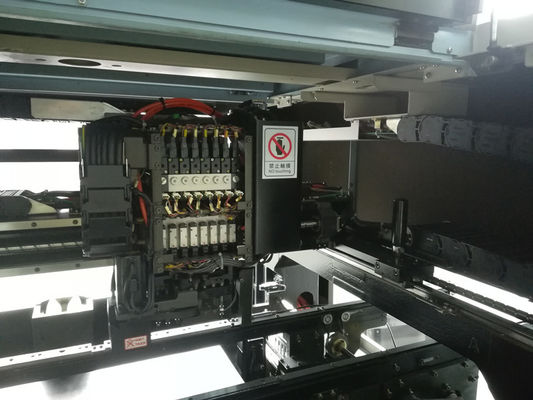
A surface-mount technology system is a highly precise piece of engineering. It relies on exact mechanical calibration and complex software integration. The hardware arrives as a sophisticated network of servo motors, pneumatic valves, and optical recognition cameras. Without proper calibration reports and detailed user manuals, setting up the machine involves dangerous guesswork. Incorrect installation leads to damaged electronic components, misaligned placement, or entirely inefficient production runs. Documentation provides the exact baseline parameters required for accurate setup.
Documentation also serves as your primary safety net. Warranty certificates, purchase agreements, and factory inspection reports establish the legal and technical baseline of the equipment's condition prior to shipping. Should the machine arrive with defects or sustain damage during ocean transit, these documents are absolutely necessary to file insurance claims or request replacement parts from the overseas manufacturer.
The physical movement of heavy machinery requires a standardized set of shipping documents. While your freight forwarder and customs broker typically handle these files, the buyer must ensure the supplier provides them accurately from the outset.
The Commercial Invoice serves as the official proof of sale. It is the primary document used by customs officials to determine import duties and taxes. To avoid customs disputes, this document must be highly detailed. It should explicitly state the machine's financial value, the agreed Incoterms such as FOB or CIF, and the correct Harmonized System code. Additionally, it must include the full legal contact details of both the supplier and the buyer.
While the invoice details the financial transaction, the Packing List details the physical shipment. It outlines the exact contents, net weight, gross weight, and exterior dimensions of the wooden crates. Because customs officials cannot pry open every sealed industrial crate, they rely heavily on the packing list to verify the shipment's contents. In particular, it indicates if the wooden packaging has been properly fumigated meeting the ISPM-15 standard. This is a strict, non-negotiable requirement for importing timber crates into most Western countries.
This document acts as the official receipt of cargo and the binding contract of carriage. A Bill of Lading is used for sea freight, while an Air Waybill is utilized for air freight. The Bill of Lading is particularly critical because it serves as a document of title. Possessing the original copy legally proves your ownership of the goods during transit. Buyers usually need to present this document to the destination port authorities to secure the release of their cargo.
The Certificate of Origin formally declares where the machine was manufactured. Depending on your country's bilateral trade agreements, specific variations of this document might qualify your business for significantly reduced import tariffs.
Once the shipping crate safely arrives at your facility, the focus shifts entirely from logistics to engineering. Technical documents are essential for transitioning the SMT Pick And Place Machine from a static piece of hardware into an active production asset.
The user manual is the primary reference text for daily operation. It provides detailed instructions for powering on the machine, executing the homing sequence, loading tape feeders, and running basic placement programs. It is imperative to request this manual in English prior to finalizing the purchase. A well-documented manual also includes crucial safety warnings regarding high-voltage electrical hazards and fast-moving mechanical parts, ensuring operator safety on the factory floor.
Industrial placement machines require strict, uncompromising maintenance schedules to retain their high-speed placement accuracy over time. The maintenance guide details daily, weekly, and monthly routines. This includes practical instructions on lubricating linear guide rails, cleaning fragile vacuum nozzles, replacing air filters, and tensioning drive belts. Furthermore, the troubleshooting section lists common error codes generated by the machine's software. It provides systematic steps to resolve pneumatics or vision system faults without needing to immediately contact overseas support.
Modern placement equipment relies heavily on proprietary software for component recognition and PCB coordinate programming. The software guide explains how to install the operating system, often delivered via a secure USB drive or a digital download link. More importantly, it provides essential instructions on how to use the physical activation dongles or digital license keys required to unlock the software. Without these licensing documents and tools, the machine simply cannot process CAD data or execute production runs.
Compliance documents prove that the supplier adheres to strict manufacturing, electrical, and safety standards. These files are vital for passing local municipal safety inspections and securing commercial facility insurance.
For buyers operating within the European Economic Area, CE certification is legally non-negotiable. The CE mark indicates that the machinery complies with relevant EU directives, specifically the Machinery Directive and the Electromagnetic Compatibility Directive. Even for buyers located in the United States or other global regions, a valid CE certificate serves as a strong, objective indicator of electrical safety and robust quality construction. RoHS compliance documents further certify that the machine's internal electronics are free from hazardous materials like lead and cadmium.
Before leaving the manufacturing facility, industrial equipment undergoes rigorous stress testing. The factory calibration report provides empirical data on your specific machine, identified by its unique serial number. High-performance models in the industry typically feature placement speeds reaching up to 42,000 components per hour and handle components ranging from 0201 metric chips to 74mm square ICs. The calibration report must validate these exact parameters. It includes tests for X-Y axis placement accuracy, often demanding a precision of ±0.03mm. It also features Process Capability Index data, proving the machine operates well within acceptable statistical deviations.
To better understand the commercial value of perfect paperwork, review the following breakdown of how missing documents directly impact your bottom line.
| Document Type | Primary Purpose | Risk of Absence or Error |
|---|---|---|
| Commercial Invoice | Customs valuation and tax assessment | Shipment held at port; daily demurrage fees accrue rapidly. |
| Calibration Report | Verifies placement accuracy and speed limits | Blind installation; potential PCB damage and high defect rates. |
| Software License Dongle | Unlocks offline programming and CAD processing | Machine cannot process Gerber files; production is entirely halted. |
| CE / RoHS Certificate | Proves electrical and environmental safety | Failed municipal safety audits; commercial insurance claim denials. |
When your equipment finally arrives, the unboxing process must be handled systematically. In the excitement of receiving new manufacturing hardware, it is surprisingly easy for receiving teams to accidentally discard critical paperwork along with the packaging materials. Establishing a standardized protocol ensures that no essential operational data is lost when receiving your PCB assembly pick and place machine.
Before prying open the main wooden crate, inspect the exterior. Freight forwarders and customs officials require immediate access to shipping documents. You will usually find a waterproof, transparent envelope securely taped to the outside of the crate. This envelope contains the final Packing List, a copy of the Commercial Invoice, and the Bill of Lading. Retrieve these immediately and hand them to your procurement department for record-keeping.
Once the crate is opened, resist the urge to immediately power on the machine. Instead, conduct a thorough search for technical documentation. Manufacturers often place sensitive documents inside the main electrical cabinet to protect them from moisture and physical damage during transit. Look for a heavy-duty folder containing the physical User Manual, the Calibration Report, and the Warranty Certificate. Systematically cross-reference the physical contents against the printed packing list.
Physical manuals are easily misplaced or stained with grease on a busy factory floor. Upon retrieving the paperwork, immediately scan the Calibration Report, Warranty Certificate, and Maintenance Schedules. Upload these files, along with the contents of the software USB drive, to a secure company server. This ensures your engineering team has uninterrupted access to the machine’s documentation, even if the physical copies are destroyed.
Importing industrial equipment involves multiple departments on the supplier side, including sales, engineering, quality control, and logistics. Miscommunication between these departments sometimes results in administrative oversights. Understanding common documentation pitfalls allows buyers to proactively secure their requirements.
One of the most frequent issues buyers face is the omission of software licensing dongles. Many modern machines utilize offline programming software that allows engineers to set up production runs on their laptops. This software almost always requires a physical USB security dongle to function. Because the dongle is small, it is easily forgotten by the packing team or accidentally thrown away by the buyer during unboxing. Another critical failure is receiving technical manuals exclusively in Chinese, rendering them utterly unusable for international operators.
To avoid these frustrating scenarios, buyers must be proactive. The most effective preventative measure is to explicitly state all document requirements in the initial Purchase Order. Add a specific clause detailing that final payment is contingent upon the receipt of all technical manuals in clear English, alongside digital copies of all compliance certificates.
Additionally, require a digital handover before the physical shipment occurs. Ask your supplier to email high-resolution PDF copies of the Commercial Invoice, Packing List, Bill of Lading, and all technical manuals at least one week before the vessel departs the port. This window allows you to correct tariff codes or request translated manuals while the supplier still has direct access to the files.
In the highly competitive international machinery market, verifying the legitimacy of compliance and testing documents ensures you receive equipment that truly meets stated safety standards. It guarantees the hardware performs to the exact specifications promised during the sales pitch.
A valid CE certificate is not simply a generic logo printed on a page. Authentic CE certificates for heavy machinery are typically issued by an independent, third-party testing body. You can verify the authenticity of a CE certificate by checking the four-digit notified body number against the European Commission's official database. If the certificate lacks a verifiable testing body or references outdated directives, it will not hold up to regulatory scrutiny during a facility safety audit.
Factory calibration reports and warranty certificates are only valid if they apply directly to your specific hardware. Upon unboxing, locate the metal manufacturer nameplate riveted near the main power input on the chassis. Verify that the voltage, manufacturing date, and serial number stamped on the metal plate perfectly match the data printed on your calibration report and Commercial Invoice. Discrepancies here void warranties, render calibration data untrustworthy, and complicate future parts ordering.
Importing surface-mount technology requires careful, strategic planning. Proper documentation ensures smooth customs clearance, prevents expensive port delays, and guarantees a quick, safe technical setup on your factory floor. Always verify your paperwork before the equipment physically ships. Check certificates, manuals, and invoices for complete accuracy and matching serial numbers.
Reliable suppliers provide these critical files transparently and without any hesitation. If you are looking to scale your PCB production with high-performance equipment, you need a partner who understands both the engineering and the logistics. Visit SMT Wenzhan to explore our comprehensive catalog of industry-leading machinery. Our team provides expert advice to help you select the exact equipment that fits your production line, backed by flawless documentation and dedicated support. Contact us today to navigate your next equipment upgrade without the stress.
Yes, reputable Chinese manufacturers provide fully translated English manuals, but you must explicitly request this during the negotiation phase. Industrial machinery involves highly specific technical terminology regarding pneumatic systems, optical alignment, and servo motors. Therefore, it is highly recommended to ask the supplier for a sample page of their English manual before finalizing the purchase to assess the translation quality. In many cases, the machine's operating software also features a bilingual interface, allowing operators to toggle between English and Chinese.
If customs places a hold on your shipment, it is usually due to a discrepancy in the shipping paperwork, such as a missing Commercial Invoice, an incorrect tariff code, or an undervalued declaration. When a hold occurs, your designated customs broker receives a formal notification detailing the contested information. You then need to contact your supplier to obtain the corrected digital documents. It is critical to resolve these holds quickly, as ports charge daily demurrage and storage fees for cargo that cannot be cleared.
The primary machine control software is almost always pre-installed on the internal industrial computer that drives the equipment. When you power on the machine, the operating interface boots up automatically. However, production also relies heavily on offline programming software, which allows engineers to convert PCB Gerber files into placement coordinates from their office desks. The supplier provides these installation files on a USB drive or via a secure download link, alongside a physical security dongle that must be plugged into the engineer's laptop to authenticate the license.
The legal requirement for CE certification depends entirely on your geographical location. In the European Economic Area, a valid CE mark and the accompanying Declaration of Conformity are strict legal requirements. Without them, the machine cannot clear European customs. In the United States, CE marks hold no legal weight with Customs and Border Protection. However, local regulatory bodies and municipal electrical inspectors often look for recognized safety certifications. While a CE mark is not a direct substitute for a UL listing, it serves as a strong, globally recognized indicator of electrical and mechanical safety.
A genuine factory calibration report should never look like a generic marketing brochure. It must contain highly specific, empirical data collected during the Factory Acceptance Test. Look for detailed metrics such as the Process Capability Index values for X, Y, and Theta axis placement accuracy. The report must clearly state the environmental conditions during testing, the exact testing standards used, and feature the official stamp of the lead quality control engineer. Most importantly, the machine serial number on every page of the report must perfectly match the engraved nameplate on the machine itself.
The Harmonized System code determines the import duties and taxes applied to your machinery. For most automated placement equipment, the globally recognized HS code falls under 8479.89, which covers machines and mechanical appliances having individual functions not specified elsewhere. However, tariff classifications can vary slightly depending on your specific country's customs regulations and the exact configuration of the machine. Always verify the proposed HS code with a licensed customs broker in your destination country before the Commercial Invoice is finalized.
In most Western countries, including the United States and the European Union, you do not need a specialized import license to bring standard SMT equipment across the border. However, you must have a registered business entity and a valid tax identification number. In the US, for example, you will need an Employer Identification Number and a continuous customs bond if the equipment's value exceeds a certain threshold. It is highly recommended to partner with a certified freight forwarder who can guide you through the specific administrative requirements of your local port authority.