Views: 0 Author: Site Editor Publish Time: 2026-10-28 Origin: Site
Surface Mount Technology manufacturing demands uncompromising precision. Yet, engineers frequently face a stubborn reality on the production floor. Solder debris accumulates relentlessly. Picture a high-volume assembly line. A microscopic pop of trapped moisture inside a reflow oven sends molten solder spheres flying across the transport rails. As printed circuit boards traverse the line, loose solder balls, sticky flux residues, and micro-particulates detach. They fall directly onto conveyor belts and grind into guide rails. Sensitive optical sensors become obscured. Left unchecked, this contamination triggers mechanical jams, severe board defects, and agonizingly expensive downtime.
Addressing this persistent threat requires much more than occasional manual wipe-downs. Modern facilities combat particulate buildup by deploying advanced, self-sustaining machinery designed specifically for debris management. This comprehensive guide explores the most effective equipment, integrated automated features, and empirical maintenance strategies. Implementing these solutions will keep your transport systems completely clear of solder debris, ensuring optimal yield and operational efficiency.
Recent market analyses of electronics assembly automation highlight a critical industry shift. As component miniaturization accelerates toward 0201 and 01005 metric packages, the tolerance for particulate contamination has plummeted. Industry reports show that top-tier manufacturers are aggressively upgrading their handling equipment. They are moving away from manual interventions and adopting closed-loop, self-cleaning transport modules. This transition is largely driven by stringent automotive and aerospace quality standards. In these highly regulated sectors, a single misplaced solder flake can cause catastrophic field failures. Consequently, investing in proactive debris management is no longer just a maintenance upgrade. It is a mandatory step to secure high-yield, high-reliability manufacturing contracts.
To effectively eradicate contamination, production engineers must first trace these byproducts to their source. Understanding why they pose such a formidable mechanical threat to automated handling equipment is the first step toward prevention.
During the intense thermal cycles of assembly, solder paste and solid wire undergo rapid phase changes that inevitably produce unwanted residues. Solder balls are tiny spherical particles that detach from the main joint during reflow. This detachment is typically caused by flux outgassing or aggressive pre-heating profiles. Flux residue is the sticky, resinous footprint left behind after chemical cleaning agents burn off. Furthermore, in wave soldering applications, a layer of oxidized metal known as dross forms on the molten bath surface. This dross occasionally clings to the bottom of passing boards. When mixed with ambient industrial dust, these elements forge a hardened, highly abrasive paste.
The moment these particulates dislodge from the circuit board, they infiltrate the inner workings of the transport machinery. From a mechanical standpoint, hard solder balls and oxidized dross wedge themselves into drive chains or embed deep within rubber belts. Over time, this relentless abrasive action grinds down moving parts. The process culminates in belt slippage or catastrophic chain jams. Modern traffic control relies heavily on optical sensors to track board positioning. When sticky flux smears across a sensor lens, the system registers a false obstruction. The entire line halts unnecessarily. The financial hemorrhage caused by these disruptions is substantial. Idle machinery directly translates to lost manufacturing capacity and elevated rework costs.
Addressing loose contaminants before they can settle into delicate machinery requires strategic mechanical intervention. In high-volume environments, board inversion has emerged as a premier defense mechanism.
Unlike flat transport modules that merely shuttle boards from point A to point B, a PCB Conveyor SMT Flipper Machine is a highly specialized segment. It is engineered to rotate a printed circuit board exactly 180 degrees. Positioned strategically downstream of the soldering stages, this equipment utilizes motorized or pneumatic clamping mechanisms. These clamps gently but firmly secure the PCB edges. Once locked in place, the central chassis rotates. It flips the board completely upside down before either passing it to the next machine or reverting it to its original orientation.
The underlying principle of this debris removal method relies on simple physics. After a board exits the reflow oven, un-melted paste and stray component fragments may rest precariously on the surface. They often sit trapped between dense chip clusters. By turning the board over, gravity compels these loose contaminants to fall away harmlessly. The stray metal drops safely into a designated, easily removable collection tray housed at the base of the unit. Specifically, this non-contact approach eliminates the need for harsh physical scraping. It safeguards fragile surface-mount components while ensuring that stray conductive materials are comprehensively purged.
While flipper modules handle the debris resting on the boards themselves, the transport architecture must also maintain its own pristine condition. High-end automation successfully embeds self-cleaning mechanisms directly into the machinery.
To prevent flux and dust from crusting along the transport rails, advanced systems incorporate motorized rotary brushes. Positioned strategically along the belt return path, these spinning bristles physically sweep away hardened flux and micro-solder flakes as the system cycles. Friction from brushing can generate static electricity. Therefore, these components are strictly manufactured using anti-static materials. This crucial design detail ensures that the cleaning action never discharges harmful static into the highly sensitive electronic assemblies passing overhead.
Physical brushing reaches its peak efficiency when paired with pneumatic systems. A modern full automatic pcb conveyor frequently integrates targeted air blowers near the width-adjustment rails. These blowers emit sharp, high-pressure bursts of dry air. They dislodge stubborn particulates trapped in tight mechanical crevices. Simultaneously, a robust vacuum extraction system captures the airborne fallout. Rather than merely blowing dust into the factory atmosphere, the vacuum safely pulls the dislodged flakes into a self-contained HEPA filtration unit. The production environment remains continuously clean without necessitating manual downtime.
The foundational material of your handling equipment dictates how easily it accumulates manufacturing byproducts. Upgrading structural components drastically slashes maintenance overhead.
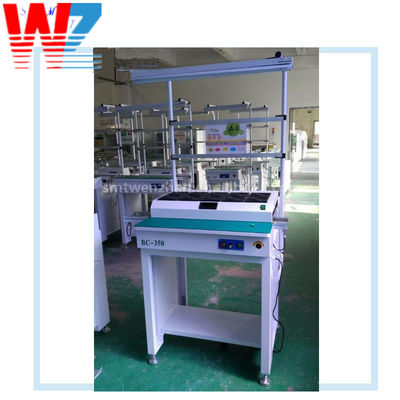
Standard transport frames are often extruded from aluminum or heavy-duty industrial plastics. While initially cost-effective, these materials possess surface energies and thermal properties that allow hot solder splatter to bond tightly. In stark contrast, an SS smt conveyor is forged from high-grade stainless steel, typically 304 or 316 grade. This material boasts exceptional resistance to both heat and chemical corrosion. When stray, high-temperature dross splatters onto a stainless frame, the lower thermal conductivity and ultra-smooth finish prevent the solder from fusing. Instead of forming a permanent weld, the cooled solder simply rests on the surface. It is ready to be brushed away with minimal effort.
To highlight the operational differences, consider the following baseline comparison between standard aluminum frames and upgraded stainless steel frameworks.
| Performance Metric | Standard Aluminum Frame | Stainless Steel Framework |
|---|---|---|
| Solder Adhesion | High. Molten solder easily fuses to the porous surface. | Low. Smooth finish prevents permanent bonding. |
| Chemical Resistance | Poor. Pits and oxidizes when exposed to harsh flux removers. | Excellent. Withstands concentrated industrial solvents. |
| Cleaning Effort | Labor-intensive. Requires physical scraping. | Minimal. Debris wipes away easily. |
| Long-term Durability | Moderate. Surface degrades over time, trapping more debris. | High. Maintains structural integrity and smooth finish for years. |
When evaluating debris management protocols, facility managers must weigh the upfront capital expenditure of automated systems against the chronic labor costs of manual scrubbing.
Historically, clearing rails and sensors relied entirely on elbow grease. Technicians armed with desoldering braids, manual suction pumps, and stiff-bristled brushes would painstakingly scrub the machinery with isopropyl alcohol. These manual interventions are somewhat effective for low-volume prototype shops. However, they are disastrously inefficient for high-speed production. Manual scrubbing necessitates powering down the entire line. This results in zero throughput during the maintenance window. Human error is also inevitable. A tired operator might overlook a critical optical sensor or apply excessive physical pressure, inadvertently misaligning the transport rails.
Relying on integrated automation ensures that debris removal occurs with programmed precision. The machinery applies the exact same pressure and frequency every single time a board passes through. This predictable maintenance rhythm reduces unexpected breakdowns. It slashes direct labor costs and virtually eliminates the risk of human-induced mechanical damage. Facilities that upgrade to self-cleaning modules report a rapid return on investment through increased machine uptime and reduced defect rates.
Despite the brilliance of self-cleaning technologies, establishing a baseline of preventative maintenance is vital. This ensures contaminants never reach critical mass.
Implementing a structured, documented cleaning regimen is the most reliable way to protect your capital equipment. On a daily basis, operators should execute a rapid visual inspection. They must wipe down all optical reflectors with a lint-free cloth and approved solvent to guarantee flawless board tracking. It is equally important to empty the collection trays beneath the flipper modules and wave soldering exits to prevent overflow. Weekly maintenance demands a slightly deeper dive. Technicians should verify the tension of drive belts, adjusting them to compensate for any stretching induced by friction. Inspecting the HEPA filters in the vacuum units is also mandatory.
Mechanical wear is a fact of industrial life. Accelerated degradation caused by abrasive particulates is entirely preventable. Maintenance crews must routinely scrutinize the physical transport mechanisms. Uneven wear patterns on the rubber or anti-static belts typically signal that a hardened chunk of flux is wedged within the pulley system. For chain-driven variants, technicians should listen closely for irregular grinding noises during operation. This is an early acoustic warning that abrasive dross has infiltrated the chain links. Applying high-temperature lubricant to the width-adjustment lead screws will further prevent abrasive dust from destroying the threads.
Selecting the appropriate machinery requires a nuanced understanding of your unique production environment. Not all assembly lines generate the same volume or profile of waste.
Before authorizing new equipment procurement, advise your engineering team to audit current defect rates. Pinpoint the exact zones where contamination peaks. If your primary bottleneck involves loose solder balls causing electrical shorts during end-of-line testing, deploying a flipper machine immediately after the reflow oven provides the highest return on investment. In contrast, if wave soldering dross is rapidly chewing through your transport rails, the strategic focus should pivot toward upgrading the conveyor materials directly downstream of the wave machine.
When finalizing your purchasing criteria, consolidate your strategy around durability and self-sufficiency. Prioritize a stainless steel framework to guarantee long-term resilience against heat and harsh cleaning agents. Ensure the integration of post-soldering inversion technology to leverage gravity for non-contact debris removal. Select systems equipped with built-in rotary brushes and vacuum extraction. Layering these automated defenses minimizes manual handling, curtails labor expenses, and empowers your production line to operate at peak efficiency around the clock.
Clearing solder debris requires significantly more than just basic manual scrubbing. It demands smart, purpose-built machinery like automated vacuums and inverting modules. Durable stainless steel construction plays a truly vital role in preventing molten metal from fusing to your transport architecture. Keeping your handling equipment pristine directly boosts product yield and increases your overall operational profitability over time. Evaluate your current line setup today. For tailored solutions and robust handling equipment, explore the comprehensive range of automation systems at SMT Wenzhan to streamline your manufacturing process, reduce unexpected downtime, and secure a higher standard of product quality.
The most effective approach combines daily manual maintenance with integrated automated systems. Operators should perform daily wipe-downs of critical components, such as optical sensors and guide rails, using anti-static solvents like isopropyl alcohol. For continuous operation, relying on the built-in rotary brushes and vacuum extraction attachments ensures that dust and flux are removed dynamically. This prevents severe buildup before manual cleaning is even necessary.
Short circuits often occur when loose, un-melted solder balls detach from the board and bridge the gap between two conductive traces. By inverting the board 180 degrees, a flipper machine uses gravity to ensure these loose solder balls fall off the board harmlessly into a collection tray. This process removes the conductive debris before the board reaches the testing phase or receives conformal coating, directly preventing electrical shorts.
A conveyor constructed from stainless steel offers superior durability in high-heat environments. Hot solder splatter is much less likely to bond to the smooth surface of stainless steel compared to porous aluminum. Additionally, stainless steel easily withstands the harsh, corrosive industrial solvents required to clean hardened flux. Aluminum can pit or degrade over time when exposed to the same chemicals.
Industry best practices recommend a brief, daily visual inspection to ensure that optical sensors are clear and that no large debris is obstructing the belts. A more comprehensive mechanical inspection should be performed on a weekly basis. This includes checking belt tension, emptying collection trays, and cleaning the drive chains to guarantee optimal performance and prevent abrasive damage.
Flux residue is highly sticky and acidic. When it accumulates on conveyor belts, it hardens into a resinous crust. This crust traps ambient dust and micro-metal shavings, turning the belt surface into an abrasive sandpaper-like texture. Over time, this abrasive layer grinds against pulleys and guide rails, causing premature belt stretching, fraying, and eventual snapping, drastically reducing the operational lifespan of the belt.
Yes. Optical sensors rely on clear line-of-sight to detect board presence and trigger stop mechanisms. When micro-solder spheres or vaporized flux settle on the sensor lenses, they scatter or block the infrared beams. This contamination causes the sensor to register false positives, leading to phantom traffic jams, misaligned board transfers, and unnecessary line stoppages.